Real Problems. Real Systems. Real Results.
– click the box below to go directly to that case study –
Three businesses, three different operational problems, three different systems built to solve them. Keep scrolling for the specifics.

Case Study: Building a Statewide Operational Framework for Maternal Health
Coordinated a statewide maternal health initiative across 61 local health departments and 20 community organizations while managing a 18–23 grants with compliance and reporting accuracy.
- Client: Nonprofit Public Charity & State Department of Public Health
- Focus Population: Women of Childbearing Age (KY Statewide)
- Core Competencies: Multi-Stakeholder Coordination, Grants & Compliance Management, Program Operations, Data & Reporting Systems, Cross-Sector Partnership Development, Public Health Program Administration
The Challenge: Coordinating a Decentralized Statewide Initiative
A statewide public health initiative relied on more than 75 independent organizations, including state leadership, local health departments, and community agencies, to deliver a common mission.
Despite shared goals, operations were highly fragmented. Organizations worked independently, reporting structures varied, communication was inconsistent, and there was no centralized mechanism for measuring performance or coordinating resources across the network.
Key operational challenges included:
- Multiple stakeholders operating without a shared accountability framework
- Inconsistent reporting and limited visibility into statewide progress
- Resource allocation across numerous grant-funded initiatives
- Duplication of effort and competing timelines among partner organizations
- No standardized infrastructure for performance measurement or decision-making
The challenge was not simply delivering a public health campaign. It was creating the operational structure necessary to coordinate a complex, multi-organizational initiative at scale.
The Strategy: Building Operational Infrastructure for Scale
To create alignment across a decentralized network, I developed and managed a statewide operational framework that established consistent communication, accountability, reporting, and grant oversight processes.
Stakeholder Coordination
Created a structured coalition model connecting state leadership, local health departments, and community organizations through:
- Quarterly planning and accountability meetings
- Shared implementation timelines
- Standardized performance expectations
- Ongoing cross-organizational communication
This transformed a collection of independent efforts into a coordinated statewide initiative.
Grants Management
Managed 18–23 active grantees simultaneously, overseeing:
- Funding allocation
- Compliance monitoring
- Reporting requirements
- Fiscal deadlines
- Performance evaluation
Established clear processes that enabled organizations of varying size and capacity to meet program requirements consistently.
Operational Systems Development
Designed and maintained a standardized reporting infrastructure that:
- Collected data across multiple organizations
- Created visibility into statewide performance
- Supported decision-making and continuous improvement
- Ensured consistent reporting across all funded partners
Win
The Results
The initiative evolved from a collection of independent activities into a coordinated statewide operation supported by clear processes, consistent reporting, and shared accountability.
Key outcomes included:
- Coordinated engagement across 75+ stakeholders
- Management of 18–23 concurrent grant-funded projects
- 100% compliance with reporting and funding requirements
- Standardized statewide reporting infrastructure
- Long-term partnerships sustained through consistent operational practices
Most importantly, the operational systems established during the initiative created a foundation that enabled partners to work more effectively together long after individual activities were completed.
The Baseline: core operational layers that determine whether a distributed system can function cohesively or remains fragmented.
Before coordination, compliance, or reporting can function at scale, the operational baseline has to be clearly defined. In complex, multi-entity systems, failure is rarely caused by lack of effort. It is caused by missing structure at the foundational level of how work is organized, executed, and measured.
This baseline analysis focuses on four core operational layers that determine whether a distributed system can function cohesively or remains fragmented.
1. Stakeholder Architecture (Who is involved and in what capacity)
The first step is mapping the full ecosystem of participants and clarifying functional roles across the system.
In this type of statewide initiative, the stakeholder structure typically includes:
- State-level public health leadership responsible for strategy and oversight
- Local health departments responsible for implementation and community delivery
- Community-based organizations supporting outreach and engagement
- Grant-making and compliance bodies responsible for funding oversight
- Target populations served through indirect delivery channels
Without clear delineation of roles and responsibilities across these groups, coordination defaults to informal communication patterns and inconsistent execution.
2. Operational Flow (How work moves through the system)
Once stakeholders are defined, the next layer is understanding how work actually moves across the network.
This includes:
- How initiatives are assigned and distributed across entities
- How directives move from strategy to implementation
- How information is communicated between organizations
- Where decision-making authority is held versus where execution occurs
- Where breakdowns typically occur between planning and delivery
In distributed systems, operational failure is rarely about intent. It is most often the result of unclear or inconsistent workflow pathways across independent actors.
3. Accountability & Reporting Structure (How performance is measured and verified)
This layer defines how the system knows whether it is functioning effectively.
Key components include:
- What data is required from participating organizations
- How frequently reporting occurs across the network
- How compliance is defined, tracked, and enforced
- Where data is consolidated and validated
- How performance is evaluated across multiple funding streams
In this case, managing 18–23 concurrent grant-funded initiatives required consistent alignment between funding requirements, reporting expectations, and operational delivery across all participating entities.
Without standardized reporting structures, visibility into statewide performance becomes fragmented and unreliable.
4. Constraints & Friction Points (What limits system performance)
Every distributed system operates within structural constraints that must be accounted for in the design of the operational model.
In this environment, key constraints included:
- Autonomous organizations operating without direct hierarchical control
- Variable capacity across local health departments and community partners
- Differing funding requirements across multiple grant programs
- Misaligned timelines between stakeholders and funding cycles
- Limited centralized infrastructure for coordination or data integration
These constraints shape how coordination strategies must be designed. Effective operational systems are built in response to these limitations, not in spite of them.
Case Study: Coordinating Mobile Health Access for Rural Communities
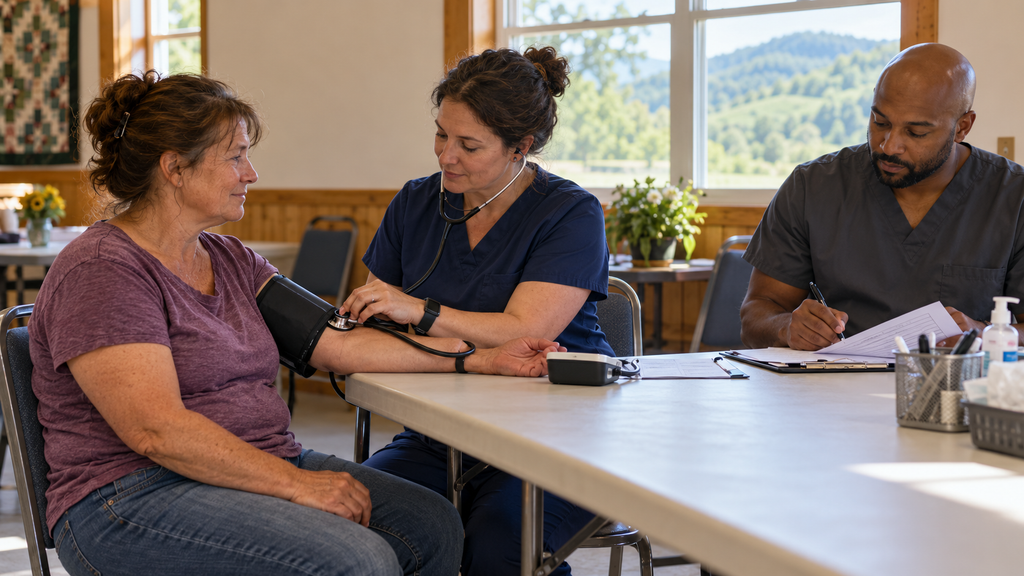
Coordinate and manage end-to-end field operations for a mobile community health initiative across 9 rural Kentucky counties over 3 consecutive summers. Coordinated team scheduling, site preparation, and on-the-ground logistics for cohorts of 7 students per field site, supervised by faculty across each represented discipline.
Client: A public university’s health sciences departments
Scope: Multi-site mobile health program, 9 rural counties
Core Competencies: Multi-Site Program Operations, Interdisciplinary Team Coordination, Stakeholder & Partner Management, Compliance & Accountability Systems
Challenge
Across nine rural Kentucky counties, thousands of residents live below the poverty line, without health insurance, without proximity to a doctor, and with a deep, earned mistrust of government systems and outside authority. These communities were largely underserved. Traditional healthcare outreach models were not built to meet this population where they were, and the absence of trust made even well-resourced interventions ineffective without the right approach. To make sure the program actually reached the right people, the client brought in an experienced operations manager to oversee their complex local setups across different sites.
Strategy
Contracted to manage the field operations of a mobile, interdisciplinary community health initiative bringing university resources directly into rural communities to deliver holistic health screenings to residents who would not otherwise access care, while coordinating the training of emerging health and social work professionals.
Core Strategic Pillars
Community Trust & Accessible Outreach
• Objective: Reach low-income, uninsured residents in communities with high mistrust of authority figures.
• Execution: Coordinated mobile clinic field placements across 9 rural Kentucky counties in partnership with regional Area Health Education Centers meeting residents in their own communities rather than formal medical settings.
Interdisciplinary Team Coordination
• Objective: Deliver comprehensive, holistic health screenings through collaborative, cross-discipline teams.
• Execution: Supervised cohorts of 7 students per county field site: from social work, medicine, nursing, dental, and community health education supervised by discipline-specific faculty, and coordinated to deliver simultaneous physical, dental, behavioral health and psychosocial screenings in a single resident visit.
Win
Over a three-year period, the project coordinated field placement sites for 126 students. Participants were organized into faculty-supervised, multidisciplinary teams. These teams served residents across nine rural Kentucky counties, delivering over 1,200 individual health screenings across the engagement. Screenings identified health concerns that would have otherwise gone undetected. In one case, a resident with an undiagnosed hypertension condition was referred to a physician through the local Area Health Education Center and received ongoing medical care. For the 126 students who completed the program, the experience required them to function inside real team structures, communicate across disciplines, and deliver coordinated evaluations under field conditions. That is not an outcome a classroom produces.
Program Operations & Field Coordination
Contracted to manage end-to-end field operations for a mobile community health initiative across 9 rural Kentucky counties over 3 consecutive summers. Coordinated team scheduling, site preparation, and on-the-ground logistics for cohorts of 7 students per field site, supervised by faculty across each represented discipline.
Interdisciplinary Team Supervision
Oversaw cross-functional student teams representing social work, medicine, nursing, dental, and community health education, totaling 126 students and 5 faculty across the engagement’s 3-year tenure. Facilitated team cohesion across disciplines, supporting students in developing the communication and collaboration skills necessary to build unified, comprehensive resident evaluations.
Community Outreach & Stakeholder Engagement
Partnered with regional Area Health Education Centers to coordinate site placement, local outreach, and resource alignment in federally designated Medically Underserved Areas and Health Professional Shortage Areas, ensuring field sites reached the communities with the greatest need and the least access.
Holistic Screening Model Implementation
Supported delivery of a multi-triage screening model that addressed physical health (blood pressure, glucose), preventative dental care, behavioral and mental health assessments, generating a comprehensive clinical profile for each resident served and contributing to a statewide database tracking healthcare disparities across Kentucky.
Practicum & Professional Development Support
Contributed to the program’s function as a credited field practicum for university students supporting their transition from academic training to applied practice, and modeling interdisciplinary collaboration as a core professional competency. Worked alongside students, faculty, and community stakeholders in a capacity that deepened operational expertise across public health, community outreach, and multi-stakeholder program management.
Case Study: Automating Client Booking & Payment Workflow for a New Service Business
Designed a ten-phase booking and payment workflow connecting five platforms into a single automated sequence. Mapped each step from initial website visit through payment confirmation, calendar creation, and automated client communication, eliminating every manual touchpoint in the original process.
Client: A solo service-based entrepreneur launching a new consulting practice
Scope: End-to-end booking, payment, and client intake automation
Core Competencies: Systems Design & Workflow Automation, Tool Integration & Configuration, AI-Augmented Operations, Payment Infrastructure & Compliance Setup, Client Intake & Communication Automation
Challenge
The client was launching a new service-based business with no operational infrastructure in place. Scheduling was handled manually through email, and payments were collected informally through PayPal and Venmo, creating back-and-forth friction, no-show risk, and zero documentation of client agreements before money changed hands. There was no system connecting availability, payment, or client communication. Every booking required manual involvement from the business owner, and there was no liability protection in place. The client needed a clean, automated workflow that could run without them.
Strategy
Designed and implemented a fully automated booking and payment system that took the client from manual, informal operations to a professional, self-running intake workflow, with no back-and-forth scheduling, no payment follow-up, and documented client consent built into every transaction.
Core Strategic Pillars
Systems Integration & Workflow Design
- Objective: Connect scheduling, payment, and communication tools into a single, automated workflow.
- Execution: Integrated Google Workspace, TidyCal, Stripe, and WordPress into a sequential booking flow, from website visit to confirmed appointment, with each platform triggering the next step automatically.
Payment & Liability Infrastructure
- Objective: Replace informal payment collection with a documented, professional system.
- Execution: Configured Stripe as the primary payment processor, linked Terms & Conditions acceptance directly to the checkout process, and set payment confirmation as the trigger for all downstream automation, including calendar events and client communications.
AI-Assisted Build & Troubleshooting
- Objective: Accelerate build time and resolve integration gaps where provider documentation was insufficient.
- Execution: Used AI to draft the Terms & Conditions page, trigger the post-payment welcome communication, and troubleshoot tool integrations where tutorials were unclear or incomplete, reducing build time and removing technical blockers without outside developer support.
Win
The client launched with a fully operational booking system that requires no manual scheduling involvement. Prospective clients can book directly through the website or via a direct booking link, with both parties accessing real-time calendar availability. Double-booking is eliminated. Payment is collected before any appointment is confirmed. The Terms & Conditions are linked directly to the payment process, creating clear liability documentation on every transaction. The post-payment welcome communication is triggered automatically, removing another manual step from the client’s plate. The client went from informal, reactive operations to a system that works whether they are at their desk or not.
Workflow Architecture
Designed a ten-phase booking and payment workflow connecting five platforms into a single automated sequence. Mapped each step from initial website visit through payment confirmation, calendar creation, and automated client communication, eliminating every manual touchpoint in the original process.
Tool Integration & Configuration
Configured Google Workspace as the calendar and communication backbone, connected TidyCal for real-time scheduling and conflict prevention, integrated Stripe for secure payment collection, and embedded the booking experience directly into the client’s WordPress site.
Payment & Compliance Setup
Replaced informal PayPal and Venmo payment collection with a Stripe-based system requiring payment before appointment confirmation. Linked Terms & Conditions acceptance to the checkout flow, creating documented client consent on every transaction and establishing clear liability protection for the business.
AI-Assisted Development
Applied AI tools to accelerate the build and resolve technical gaps, including drafting the Terms & Conditions page, configuring the post-payment communication trigger, and troubleshooting integration issues where provider documentation was insufficient. This kept the project moving without reliance on outside developer support.
Automated Client Communications
Configured a three-stage automated email sequence: immediate booking confirmation with meeting link and intake details, 24-hour reminder, and 1-hour reminder, all triggered without manual input from the business owner.
Quality Assurance
Conducted end-to-end testing across the full workflow, verifying booking functionality, payment processing, Terms & Conditions display, calendar sync, confirmation delivery, and reminder scheduling before handoff.
Let’s work together
Make an impact, and share your organization’s stats or achievements to interest your website visitors into learning more about you.


Let’s connect
Running a small business can feel isolating when you’re buried in the day-to-day demands. I’m always looking to build networks with other owners who value connections. Let’s support each other, swap stories and see how we can share referrals.