The Document Mistake That Cost One Business Its Credibility During an Audit
The auditor asked for a document.
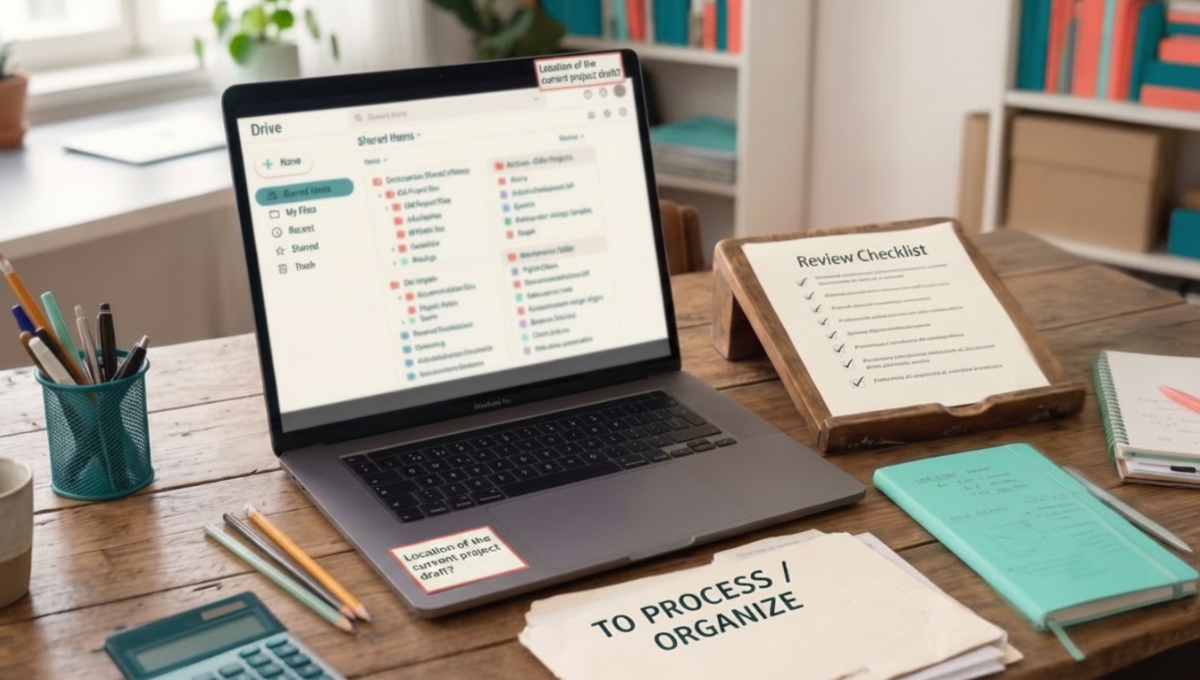
The manager clicked into the shared drive. Scrolled. Clicked again. Nothing.
The room went dead quiet. It was that silence where everyone’s eyes are glued to one screen, and the person holding the mouse completely freezes.
That’s not a filing problem. That’s a business that just found out, in front of a stranger with a checklist, that some of its required documents were never actually saved anywhere.
Here’s the failure mode nobody talks about. A document “exists” only because one person remembers saving it, or assumes someone else did. That’s not clutter. Clutter is annoying but survivable, a mess you can dig through eventually.
This is different.
This is the moment someone outside your business needs proof of something, right now, and the system has no answer.
In this case, management and the contractors had never actually agreed on what documents belonged in the drive. Everyone assumed someone else had it covered. Nobody did.
Skip the folder-cleanup advice you’ve already read a hundred times. Color-code this, rename that, archive the old stuff. Fine as far as it goes, but it doesn’t touch the actual problem.
Two things prevent what happened in that audit. A master index and a standing review.
Build one plain document, sitting at the root of your shared drive, that names every document the business is legally required to have and exactly which folder it lives in. That index is what turns “I think we have that somewhere” into “here it is”, on screen, in ten seconds.
It doesn’t require new software or a system overhaul. Whatever you’re already using, Google Drive, Dropbox, a shared server, works fine. The index is the piece almost nobody builds, and it’s the piece that actually holds a system together.
Next, put someone in charge of checking it. Every quarter. Not “when we think of it.” A specific person, a specific date on the calendar. Systems that depend on someone remembering to check them don’t get checked.
This happened to one of my clients.
Their Google Drive was full, but full isn’t the same as complete. Outdated versions sat next to current ones with no way to tell which was which at a glance. A few legally required documents weren’t in there at all. Not misfiled. Just missing.
When the audit came, the manager sat there clicking through folders while the auditor waited. Some documents asked for simply couldn’t be produced.
Afterward, we didn’t just clean up the mess. Management and the contractors worked together to determine what documents the shared drive was actually supposed to hold.
We purged everything that didn’t belong: old versions, duplicates, documents nobody could explain the purpose of. We built a master index at the root so anyone could find anything in seconds. And we put a quarterly review on the calendar with someone responsible attached to it, so the system had an owner instead of just an owner’s good intentions.
The next audit wasn’t a scramble. It was a formality.
It’s worth saying the audit is just one version of what can happen when there isn’t a clear system in place. The same gap shows up when a new hire needs a contract on their first day, when a client asks for a document mid-call, when you’re out sick and someone else has to keep things moving without you. An audit just makes the gap impossible to ignore.
The 10 second rule:
If someone outside your business asked you to prove something right now, could you pull it up in ten seconds?
If you had to think about that, the problem isn’t your folders.
The document exists but is buried in your system somewhere.
That’s not a system. That’s a liability with your name on it, waiting for the day someone besides you needs it.
The fix isn’t complicated. It just takes someone actually doing it.
You can build this yourself. Pick one afternoon. Write the master index. Purge what doesn’t belong. Assign someone and put a date next to “quarterly review” on your calendar.
None of it requires new software or a big budget, just a couple of hours to actually pull it together.
Or if you’d rather have someone else take a look at your system, tell you what’s missing and build the index for you, that’s what a Backbone Operations Discovery Call is for.
Either way, the next time someone asks for a specific document, producing it should take ten seconds, not an afternoon of digging.